
If you have a website, blog, or online business, you probably want people to find it easily on Google. This is where SEO (Search Engine Optimization) comes in. SEO helps your website appear higher in search engine results so that more people can discover your content.
In this blog, we will understand what SEO is, how it works, and why it is important for anyone who wants to grow online.
What is SEO?
SEO (Search Engine Optimization) is the process of improving a website so that it ranks higher in search engines like Google, Bing, and Yahoo.
When someone searches for something online, search engines show the most relevant results. SEO helps your website become one of those top results.
Example:
If someone searches “best digital marketing course”, SEO helps the most relevant websites appear on the first page.
The higher your website ranks, the more visitors you get.

Why SEO is Important
SEO plays a major role in online success. Here are some reasons why SEO matters:
Increases Website Traffic – Higher rankings bring more visitors.
Builds Trust and Credibility – People trust websites that appear on the first page.
Cost-Effective Marketing – Unlike ads, SEO can bring long-term free traffic.
Better User Experience – SEO improves website speed, structure, and content quality.
Higher Business Growth – More traffic often leads to more customers.
How Search Engines Work
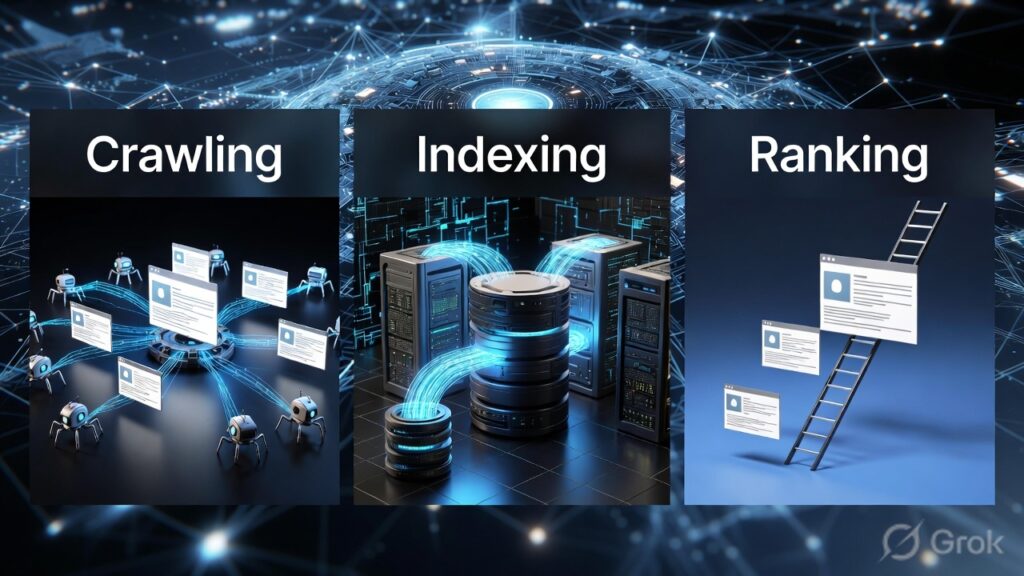
Search engines follow three main steps to show results:
1. Crawling
Search engines use bots (also called spiders) to scan websites and discover new pages.
2. Indexing
After crawling, the pages are stored in a database called an index.
3. Ranking
When someone searches for something, the search engine ranks pages based on relevance and quality.
Types of SEO
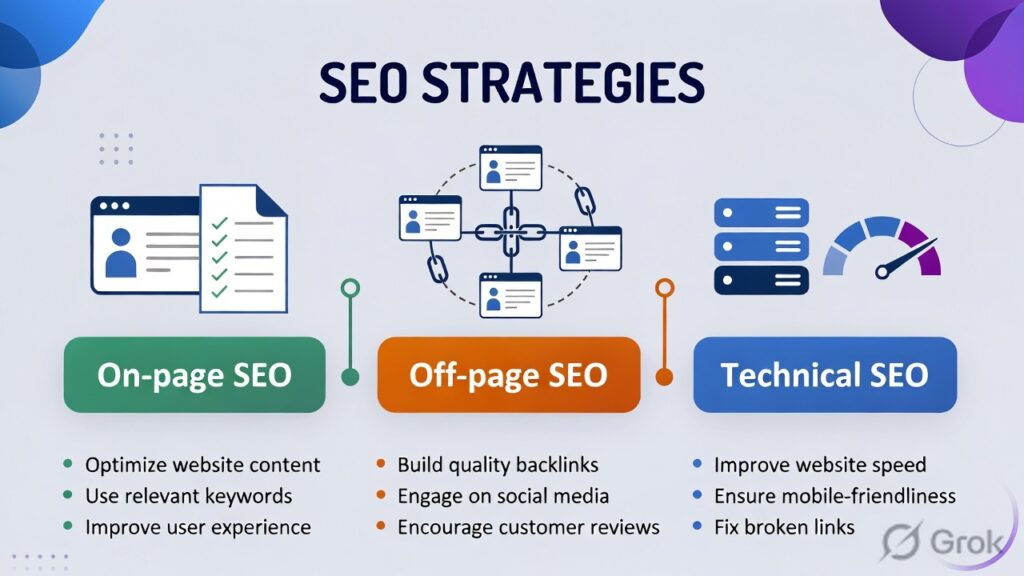
SEO is divided into three main categories:
1. On-Page SEO
On-page SEO focuses on optimizing the content and structure of your website.
Examples:
Using the right keywords
Writing high-quality content
Optimizing titles and headings
Adding internal links
Optimizing images
2. Off-Page SEO
Off-page SEO focuses on actions outside your website that improve your ranking.
Examples:
Backlinks from other websites
Social media sharing
Guest blogging
Brand mentions
3. Technical SEO
Technical SEO improves the technical performance of your website.
Examples:
Fast website speed
Mobile-friendly design
Secure website (HTTPS)
Proper website structure
XML sitemap
Key Elements of SEO
To rank well on search engines, focus on these important SEO factors:
Keyword Research – Finding the words people search for
Quality Content – Writing helpful and valuable information
Backlinks – Getting links from trusted websites
Page Speed – Faster websites rank better
Mobile Optimization – Websites must work well on phones
User Experience – Easy navigation and good design
Benefits of SEO for Websites and Businesses
SEO provides many long-term benefits:
-
Long-term organic traffic
-
Increased brand awareness
-
Higher conversion rates
-
Better online visibility
-
Competitive advantage in your industry
Simple SEO Tips for Beginners
If you are new to SEO, start with these simple steps:
-
Write content that answers people’s questions
-
Use keywords naturally in your article
-
Create clear headings and structure
-
Add images and optimize them
-
Improve website loading speed
-
Share your content on social media

Conclusion
SEO is one of the most powerful ways to grow your website and reach a larger audience online. By optimizing your content, improving your website, and focusing on user experience, you can rank higher on search engines and attract more visitors.
Whether you are a blogger, business owner, or digital marketer, learning SEO can help you build a strong online presence and achieve long-term success.
.
Lorem ipsum dolor sit amet, consectetur adipiscing elit. Ut elit tellus, luctus nec ullamcorper mattis, pulvinar dapibus leo.